
Even as the tears threaten to trickle down the eyes,
The stubborn smile refuses to leave the face,
The stubborn hope refuses to leave the heart.
By Akshita
Even as the tears threaten to trickle down the eyes,
The stubborn smile refuses to leave the face,
The stubborn hope refuses to leave the heart.

An unlikely friendship, theirs;
The Sun’s and the Moon’s.
It was the talk of the universe,
This strange celestial bond.
When stars wondered why
The Sun chose to light up
The Moon, unlit by herself.
The Earth wondered why
The Moon glowed brighter
In response to the Sun.
Was it an unequal bond,
The Moon wondered sometimes.
For the Sun was always constant,
His light never subject to time
Whereas the Moon changed in cycles,
Now waning, now growing.
“Allow me to light you”, said Sun,
“At all the times”.
“I’m afraid of favoring light”, said she,
“The dark finds its way”.
And so it did when once,
The Moon in her earthly duties,
Allowed distance so long between
That Earth came in the way,
And obscured all Moon’s light.
And when she came at last
Leaving the Earth right behind,
Moon cast a shadow so big,
The fiery radiance dimmed
And eclipsed, this time, the Sun.
The cycle swept her again,
And Moon started waning.
At last she was down to nothing,
No light of her own to guide her;
The Sun, a distant friend.
Would Sun now keep her light-less,
And shower his rays on others?
Would darkness be all she had,
Her only friend in regret,
For causing mayhem of eclipses?
She willed herself to burn
Like other stars, Sun’s equals.
She willed herself to cast light
And perhaps a higher power heard her,
For she saw her being illuminate.
Surprised, she found Sun’s rays reaching her.
Far though they may be,
They were enough to give her strength.
And Moon set about, now growing,
To find Sun across the caliginous sky.

There I was,
In the very depths;
I had hit, as they say,
Rock bottom.
It took so much time
To barely regain focus,
To prop myself up
On elbows, if not feet.
Miles below the surface,
I was surrounded by darkness.
The shadows hid horrors
Of past and future.
It took so much time
To slow down my breathing
And take a look around
Assessing my life.
I chose a jagged rock,
And took one step up.
The darkness was the same
Was a step really enough?
I curled up into myself
Losing all motivation.
It took so much time
To ignite a little fire.
With the flame of hope,
I took one step up.
Step after step I put.
Perhaps it was possible to reach out.
The flame burnt brighter
And then there was nothing.
For rocks had fallen suddenly
And I was back on the floor.
A rock had settled on my chest
The flame had flickered down to nothing.
It took so much time
To accept the fall again.
With the rock implanted in my heart
But the fire reignited,
I merged pain with hope
And took one step up, towards the sun.
It’s a relief to put everything on paper
And become a character in this tale.
So much easier than actual contemplating,
So less painful than looking in the mirror.
For when I’m on paper,
I can see the beauty in tragedy,
Literature in broken sentences,
A drama in the tear drops.
Perhaps it will help;
Becoming the character
And losing the self.

Forever
It took me to forget
The knives that I threw;
Those double-edged words
Which hurt me and you.
And yet, here I am
After all this time,
Telling myself the same story
One more time.
“You remain as you were,
Making no changes.
You innocent fool!
Thinking you can rectify
The mistakes of your past.
Thinking that it’s the thought
That counts.
Thinking that your words,
New sentences
Will balm the wounds
You inflicted.
But words are not idempotent.
What you said once
May fade over time.
And what you said once
May negate all the rest.
And what you said once
May take hold of the heart…
Forever.”

I like the bright ones;
Pink, blue, maroon.
Sometimes I even go bold
And paint my nails yellow!
Mother hated the black phase;
Dad didn’t really understand the point of the nude one.
My brother still can’t believe
That I spend time and money on elaborate nail art.
But I like the colors;
They make my world bright.
Shiny, matte; I experiment with all of them.
Silver, gold; is there any color left?
I really can’t decide on a favorite.
The man outside the shop was waiting.
As soon as I turned to the empty alleyway,
I heard his footsteps hurrying behind me.
I heard his breath; raspy and uneven.
I smelt his smell; rum and cigarettes.
I felt his arms; strong and unyielding.
The struggle ended soon enough.
I didn’t expect to be this calm.
Stumbling, I reached the main road.
A woman passed by carrying a grocery bag.
She gave me an odd look;
I still had the rock in my hand.
Red, I think. That’s my new favorite color.
Note: An attempt at poetic “turn”.

“You ruined me!” And with that, I demonized the human he thought he was.
His touch on my body felt like he was skinning me, bit by bit, ripping out my soul.
I screamed silently, choked on my own tears, felt trapped in my own body.
“But you belong to me!” He was flummoxed.
For what was his mistake, when all he did was something that was taught to him?
The shape changed again in my mind; I humanized the demon.
It was like breathing to him, wasn’t it? Ruining me, suffocating me, owning me in body and mind.
I couldn’t bear to love him, and yet, for what could I hate him?
Note: An attempt at prose poetry.

You censor my senses.
You tell me to close my eyes,
Hiding your sins in my sight.
You tell me to stop seeing.
You tell me to close my eyes,
And carry on as if nothing happened.
You tell me to stop seeing
The torture that you inflict.
And I carry on as if nothing happened.
I ignore all the warnings.
The torture that you inflict
Has become a part of my life.
I ignore all the warnings;
The suspicion and the questioning.
It has become a part of my life
To lie with ease.
Your suspicions and questions;
They have killed my spirit.
I lie with ease,
Because the truth would destroy me.
My spirit is dead.
I cannot see myself in the mirror.
The truth in my eye torments me.
So I close my eyes; censor my senses.
Note: As I mentioned before, I took an online poetry course called “How Writers Write Poetry 2015”, which finished last week. This poem is in a form that I learnt about, called the pantoum. The structure of a pantoum is as follows: There are four lines in a stanza, and the second and fourth lines of a stanza become the first and third lines of the next stanza. The first line of the poem is typically also the last line of the poem. Of all the things that I learnt in this course, this is one of my favourites. 🙂
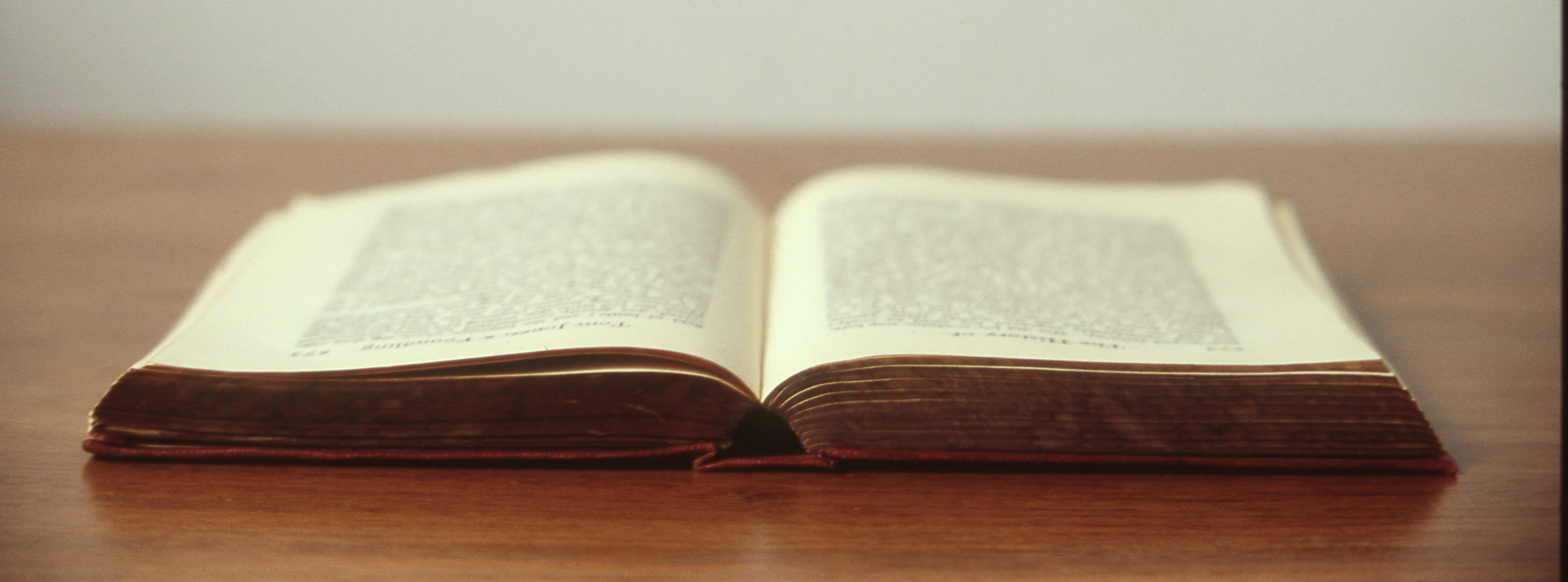
It was a stupid decision, they said. You are wasting your grades; you could easily get a better internship! But they did not understand. They did not know the absolute need, the compulsion to be there, among all those long, towering shelves of books. It was there, amidst the musty smell of books, that he could breathe.
He had his table by the classics section. It was the best table; he could see the black penguin covers, even if he was not allowed to pick any and read it during the day time. Their being there in front of him, just existing, was such a comfort. He helped people find the books; rarely did he use his computer to locate any book; he remembered where each of them was. Tolstoy’s War and Peace next to Dostoevsky’s Crime and Punishment… Bronte’s Jane Eyre besides the row of Jane Austen books. His hands lingered on the books; the touch was both familiar and exhilarating.
*
She had not been to the bookstore for four months now; an eternity. The work at the make-up aisle was mind-numbing, and hardly paid for the bills. There was no extra money for books, no extra time for perusing the different sections of the bookstore.
But she was here finally; a Tuesday when the mall was unexpectedly closed for maintenance. She felt herself in familiar territory; there was an ease in her walking now. She had a fixed routine. First, she went to the New Arrivals, reading the back covers of expensive hardbacks that she could never afford. She kept in mind the titles of the books she liked, making a mental note to buy them once they were old enough to be paperbacks or second-hands. Next, she browsed the Fiction section. Here, she opened the latest John Grisham, and read about 50 pages, standing. She would continue it from there the next time she was here. Crime and Mysteries came next, after which she walked straight past the Romance section to the one she loved best; the Classics section. Here, she walked up and down the line of shelves, reading the titles and mentally ticking off the ones she had already read. In this section, she could transport herself back to older times, tragedies of the war and the pain of betrayal. Here, she could rejoice in the “happily ever after” of Pride and Prejudice and cry at the unresolved ending of Gone with the Wind.
*
He saw her take a book in her hand and put it in a different shelf below. He stood up to prevent her from messing the shelves, but stopped. The book was A Picture of Dorian Gray, and it did belong to the lower shelf; someone must have picked it and then put it back in the most convenient spot on the higher shelf. He was surprised; she was a customer, why should it matter to her?
He slid back in his chair and watched closely. He saw her picking up book after book, reading the back covers, reading the first few pages, smiling and nodding at times. Always, she put the book back in its right place. As she browsed, she straightened the books that were not in line. It was almost an unconscious action; she displayed no exasperation on her face.
He saw her picking up yet another book now. After deliberating for a moment, she put it back. Then she picked it up again. He strained to see what book it was; Wuthering Heights.
*
She opened her purse. There were only Rs. 170 in it. The cost of the book was Rs. 160. That would leave her with just enough money to buy a bus ticket to home. There were still four days before the month end. There were still groceries to buy and bills to pay. Reluctantly, she put the book back on the shelf. She would buy it the next time. Slowly, she walked out of the bookstore.
*
He saw her returning ten minutes later. She walked with purpose now. Hurriedly, she went back to the Classics section, picked up Wuthering Heights, walked to the counter and bought it. He saw her smile once she held the book in her hands, now her own. The tension in her eyes eased gradually. With lighter steps, she walked out of the bookstore again.
He had never seen her in the bookstore before. He did not know who she was. But sitting here on his hard chair, among piles of books, he knew he had found the girl he would love.

 The Writer's Nest